AMD has sent out a new patch series that teaches Linux to tell the difference between the cores inside its hybrid processors. Until now the amd-pstate driver only handled frequency scaling and never published how much work each CPU core could actually sustain, so the scheduler treated every core as if it were equally fast. Saturday’s patches change that and turn the feature on by default on hardware that can use it.
What AMD is actually changing
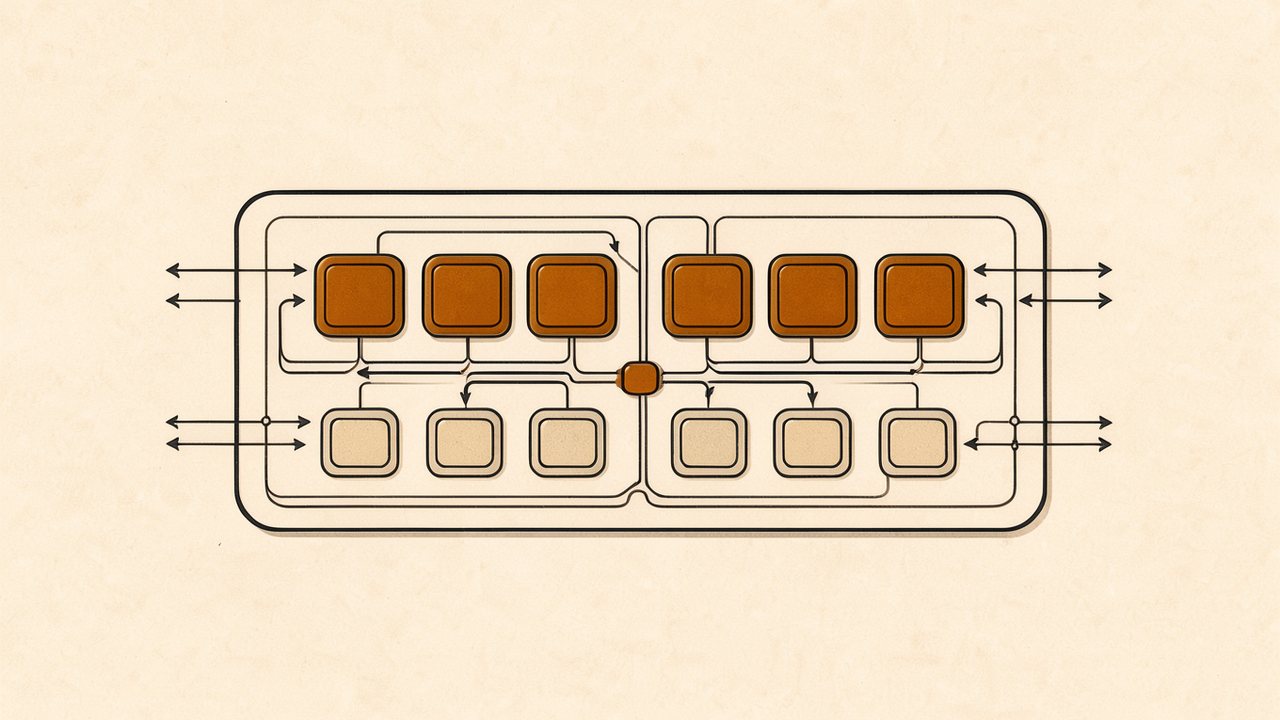
Hybrid chips mix performance and efficiency cores whose maximum sustained performance and frequency differ. The Linux scheduler places and balances tasks using per-CPU capacity values, but amd-pstate was not exporting any, so the kernel saw identical cores and shuffled work around blindly. The new code has the driver publish asymmetric per-CPU capacities, giving the scheduler a real picture of which core is stronger.
The patch series landed on the kernel mailing list on 14 November, authored by AMD’s Vishal Badole. In AMD’s own words, placing tasks “without regard to core strength… hurts both throughput and energy efficiency on hybrid systems.” The fix is exactly that: let the scheduler pick the right core for the job.
How the scheduler uses capacity
Capacity Aware Scheduling is not new. The kernel already uses it to decide where a task should run and when it is worth migrating, weighing how busy a CPU is against how much it can do. Intel’s hybrid parts and Arm’s big.LITTLE designs feed it the same kind of per-CPU metrics AMD is now adding. On those platforms the scheduler stops treating a strong core and a weak core as interchangeable.
With no capacity data, the load balancer can happily leave a heavy thread on a small core or push a light one onto a big core. Publishing the numbers is what lets the generic machinery do its job, and it also makes the behaviour predictable rather than a vendor-specific special case.
Why it matters on Ryzen
This is not a server-only concern. The target is AMD’s low-power core type, expected on some Zen 6 Ryzen SKUs. On a desktop or laptop with two different core classes, a thread that belongs on a performance core can end up parked on an efficiency core, and vice versa. That shows up as inconsistent frame times or wasted wattage, and it is the sort of thing owners notice long before a benchmark does.
AMD catching up also matters for parity. When every vendor exports capacity in the same way, distros and kernel developers can tune one code path instead of keeping per-platform workarounds alive forever.
You can turn it off
Because it changes how the scheduler behaves, AMD added an escape hatch. Booting with amd_case=disable returns the kernel to today’s behaviour if the new placement hurts a specific workload. That is a sensible default-on, opt-out design, and it gives testers something concrete to A/B on a benchmark run.
What changes for you
Right now, nothing on your system: the patches are still under review. AMD is hoping they get queued in time for the Linux 7.5 merge window, which opens around late December. If they make it, hybrid Ryzen owners should see better task placement and, potentially, small efficiency and stability wins without doing anything at all.
Do not go hunting for the patch yourself. This is scheduled work that belongs in your distro’s kernel. When 7.5 arrives on your distro of choice, the question worth asking is not whether the driver loads, but whether amd_case reports as enabled on your chip. If your hardware exposes a low-power core type, check dmesg and the kernel docs before assuming it is active — and if a workload regresses, you now have a one-flag way to rule the change out.
Sources: Phoronix — “AMD Posts Linux Patches For Capacity Aware Scheduling On Hybrid CPUs” (15 Nov 2026); patch series by Vishal Badole on lore.kernel.org.
Leave a Reply