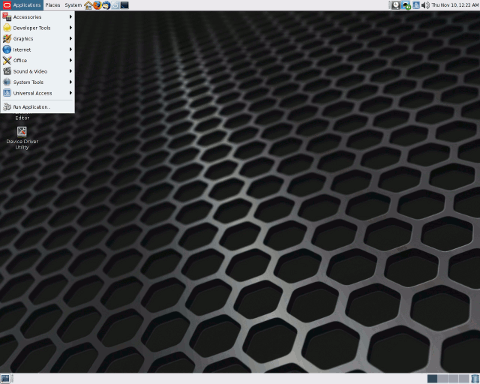
Solaris Operating System: An In-Depth Overview
What is Solaris?
Solaris is a Unix-based operating system originally developed by Sun Microsystems in the early 1990s. Designed for scalability, reliability, and enterprise-level performance, Solaris combines a powerful kernel with advanced features aimed at high-end servers and critical computing environments. Its lineage can be traced back to System V Release 4 (SVR4) and BSD Unix variants, making it a mature and stable platform. Over time, Solaris has evolved through multiple releases, integrating innovative technologies while maintaining compatibility with existing applications. Since Oracle’s acquisition of Sun Microsystems in 2010, it has been known as Oracle Solaris, continuing to serve large enterprises and data centers worldwide.
History and Origins
Solaris emerged as a merger of SunOS, which was based on BSD, and SVR4. The first version, Solaris 2.0, was released in 1992, marking a significant shift from BSD to a unified System V base. Key milestones include:
- Solaris 2.0 (1992): Introduction of System V Release 4 features alongside BSD capabilities.
- Solaris 7 (1998): Enhanced SMP support and performance tuning.
- Solaris 10 (2005): Major addition of features like Zones, ZFS, and DTrace.
- Oracle Solaris 11 (2011): Focus on cloud integration, automated packaging, and improved security.
Key Features
- ZFS File System: A combined file system and volume manager offering data integrity, snapshots, and efficient storage management.
- Solaris Zones: Operating system–level virtualization enabling multiple isolated user-space instances on a single kernel.
- DTrace: A dynamic tracing framework for real-time diagnostics and performance analysis.
- Predictive Self Healing: Automated diagnosis and recovery of hardware and software faults.
- Network Virtualization: Logical networking features such as virtual NICs and exclusive IP stacks.
- Developer Tools: Integrated compilers, debuggers, and performance profiling utilities.
How Solaris Works
Solaris leverages a modular, microkernel-inspired architecture combined with traditional Unix monolithic elements. Its design emphasizes high availability and flexibility.
Kernel Architecture
Solaris uses a modular, dynamically loadable kernel. Core components include:
- Scheduler: Implements multilevel feedback queues for process prioritization and fairness.
- Memory Manager: Provides advanced features such as large address spaces, memory mapping, and page management.
- Device Drivers: Loaded as separate modules, allowing on-the-fly updates and better fault isolation.
- File System Modules: ZFS, UFS, and other file systems integrate via a well-defined VFS interface.
Process and Thread Management
Solaris introduces light-weight processes (LWPs) and POSIX threads (pthreads), enabling fine-grained parallelism:
- Light-Weight Processes: Kernel-level entities that schedule user threads.
- User Threads: Managed in user space, providing fast context switching.
- Thread Pools: Grouping of threads for service-oriented workloads, optimizing resource utilization.
Networking Stack
The Solaris networking architecture supports both IPv4 and IPv6, along with advanced features:
- STREAMS Framework: Modular input/output system for protocol implementation.
- Multipathing: Alternate network paths for redundancy and load balancing.
- Logical Networking: Creation of virtual network interfaces bound to physical NICs.
File Systems
Solaris supports multiple file systems, each tailored for different requirements:
| File System | Features |
| ZFS | Checksums for data integrity, snapshots, clones, pooled storage |
| UFS | Legacy support, journaling option for faster recovery |
| tmpfs | Memory-resident, useful for temporary files and sockets |
| pcfs | Support for DOS/Windows-formatted partitions |
Virtualization: Solaris Zones
Solaris Zones (also called Containers) provide lightweight virtualization by partitioning the OS instance:
- Global Zone: The primary instance with administrative control.
- Non-Global Zones: Isolated environments sharing the global kernel but offering separate file systems, users, and network stacks.
- Resource Controls: Fine-grained cap on CPU, memory, and network bandwidth per zone.
DTrace: Dynamic Tracing Framework
One of Solaris’s signature features, DTrace, enables real-time monitoring without significant performance overhead:
- Providers: Components that expose probes (e.g., syscall, CPU, network).
- Probes: Instrumentation points in both kernel and userland code.
- Scripting: D scripts to define data collection and aggregation logic.
Orientation and Use Cases
Solaris is oriented towards enterprise environments requiring robustness, scalability, and manageability.
High-End File Servers and Storage
With ZFS and advanced network virtualization, Solaris often serves as the backbone of SAN and NAS solutions, delivering:
- Data integrity through end-to-end checksumming.
- High availability via predictive self-healing and redundant configurations.
- Scalable storage pools suitable for large datasets.
Mission-Critical Applications
Financial services, telecommunications, and healthcare sectors deploy Solaris for:
- Low-latency transaction processing.
- Reliable uptime with live patching and fault management.
- Compliance with stringent security standards.
Cloud and Virtualization Platforms
Oracle Solaris 11 introduced features aimed at modern cloud deployments:
- Automated Package Management: Immutable zones using Image Packaging System (IPS).
- Integrated Virtual Networking: Support for VXLAN and network virtualization overlays.
- Oracle VM Server Integration: Seamless hosting of Solaris and Linux guests.
Curiosities and Interesting Facts
Solaris has a rich history and several unique characteristics that set it apart:
1. Live Kernel Patching
Solaris supports applying critical patches to a live kernel without requiring a reboot. This feature, known as KSPP (Kernel Self-Protection Patch), minimizes downtime in production environments.
2. Fault Management Architecture (FMA)
FMA automatically diagnoses hardware and software faults. Coupled with Predictive Self Healing, it isolates faulty components and reroutes workloads to healthy resources.
3. Time Slider with ZFS
An elegant feature of ZFS, Time Slider allows users to navigate snapshots like a timeline, restoring files from specific points in time. It serves as an intuitive interface for backup and recovery.
4. License Traditions
Solaris began as proprietary software, but Sun released large portions under the OpenSolaris initiative in 2005. After Oracle’s acquisition, OpenSolaris was discontinued, yet several open-source forks such as illumos continue its legacy.
5. Sun SPARC Heritage
Solaris was tightly integrated with Sun’s SPARC architecture, optimizing instruction pipelines and memory management for workload-intensive applications. Though now supporting x86/x64 hardware, Solaris’s SPARC roots influenced its design philosophy.
Comparisons with Other Operating Systems
While Solaris shares similarities with other Unix-like systems, it stands out in several areas:
| Feature | Solaris | Linux | AIX |
| File System | ZFS, UFS | ext4, XFS, Btrfs | JFS, GPFS |
| Virtualization | Zones, Logical Domains | KVM, LXC, Docker | LPARs, WPARs |
| Tracing | DTrace | SystemTap, perf | truss, ktrace |
| Package Management | IPS | RPM, apt, yum | installp, smit |
Challenges and Considerations
Solaris’s powerful feature set comes with certain trade-offs:
- Licensing Complexity: Oracle’s commercial licensing may not suit all budgets.
- Hardware Support: Best performance on Oracle SPARC and certified x86 platforms limited community drivers.
- Community Size: Smaller user community compared to Linux distributions, affecting third-party support.
- Learning Curve: Advanced features like Zones and DTrace require specialized knowledge.
Future Directions
Oracle continues to evolve Solaris with incremental improvements focused on cloud-native deployments, container orchestration, and integration with Oracle Cloud Infrastructure. Emphasis remains on enterprise security, autonomous patching, and storage innovations, ensuring Solaris stays relevant for mission-critical workloads.
Conclusion
Solaris has carved its niche as a robust, enterprise-grade Unix operating system. With its pioneering technologies—ZFS, Zones, DTrace, and predictive self-healing—it offers a unique combination of performance, reliability, and scalability. Although licensing and community size present challenges, Solaris remains a compelling choice for environments where uptime, data integrity, and efficient virtualization are paramount. Its ongoing development under Oracle ensures that Solaris will continue to support advanced enterprise requirements for years to come.
Sources
- https://docs.oracle.com/cd/E37838_01/index.html
- https://en.wikipedia.org/wiki/Solaris_(operating_system)
- https://blogs.oracle.com/solaris/
- https://illumos.org/
Leave a Reply